Structured trail training blocks – built from objectives.
Periodized plans with integrated strength work. Adjust week by week as you progress.
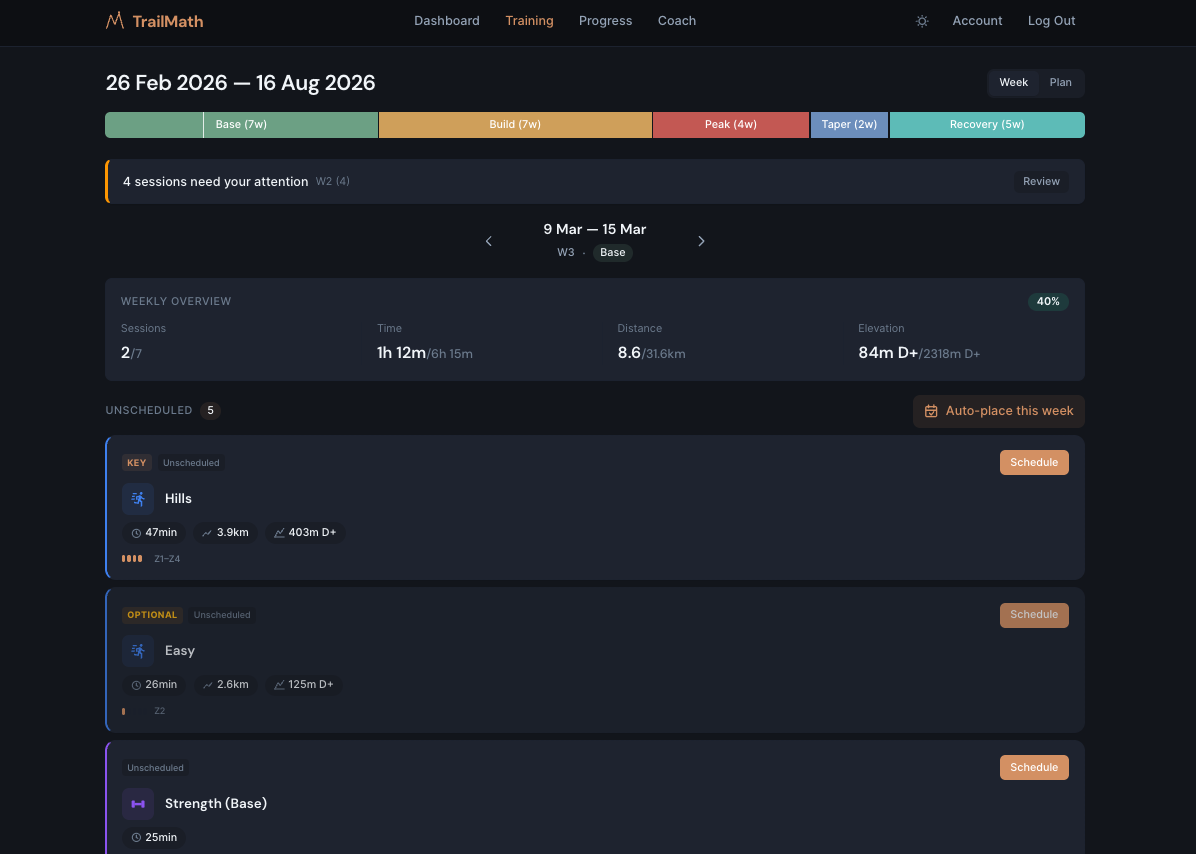
Built for runners who train with intent
Who it's for
- Mountain and trail runners tackling 30-80 km with real vertical
- Training for climbing, descent, stamina, or speed – not just "more running"
- People wanting a focused training tool – not another social platform
What makes it different
Objective-first plans
Every plan starts with a goal – a race to peak for, or a capability to build. Macro cycles, progressive overload, and planned deload weeks – not random workouts.
Strength integrated
Phase-appropriate strength work is built in, not bolted on. Posterior chain in climb blocks, eccentric work for descents, plyometrics for speed.
Conservative adaptation
Adjustments follow conservative rules – volume limits, progression caps, mandatory recovery windows. Every change is logged with visible history. AI suggests modifications within bounded constraints, and explains why.
How it works
Pick objective + horizon
Choose a template and set your timeframe – 6 to 16 weeks.
Get a structured plan
Phased blocks with runs, strength, and planned recovery. Each session has a clear purpose – tempo for threshold, eccentric work for descents, easy runs for recovery.
Adjust week by week
Log sessions, review suggested adjustments, and progress through your block.
See it in action
Real screens from the app – structured weeks, detailed sessions, and training adjustments.
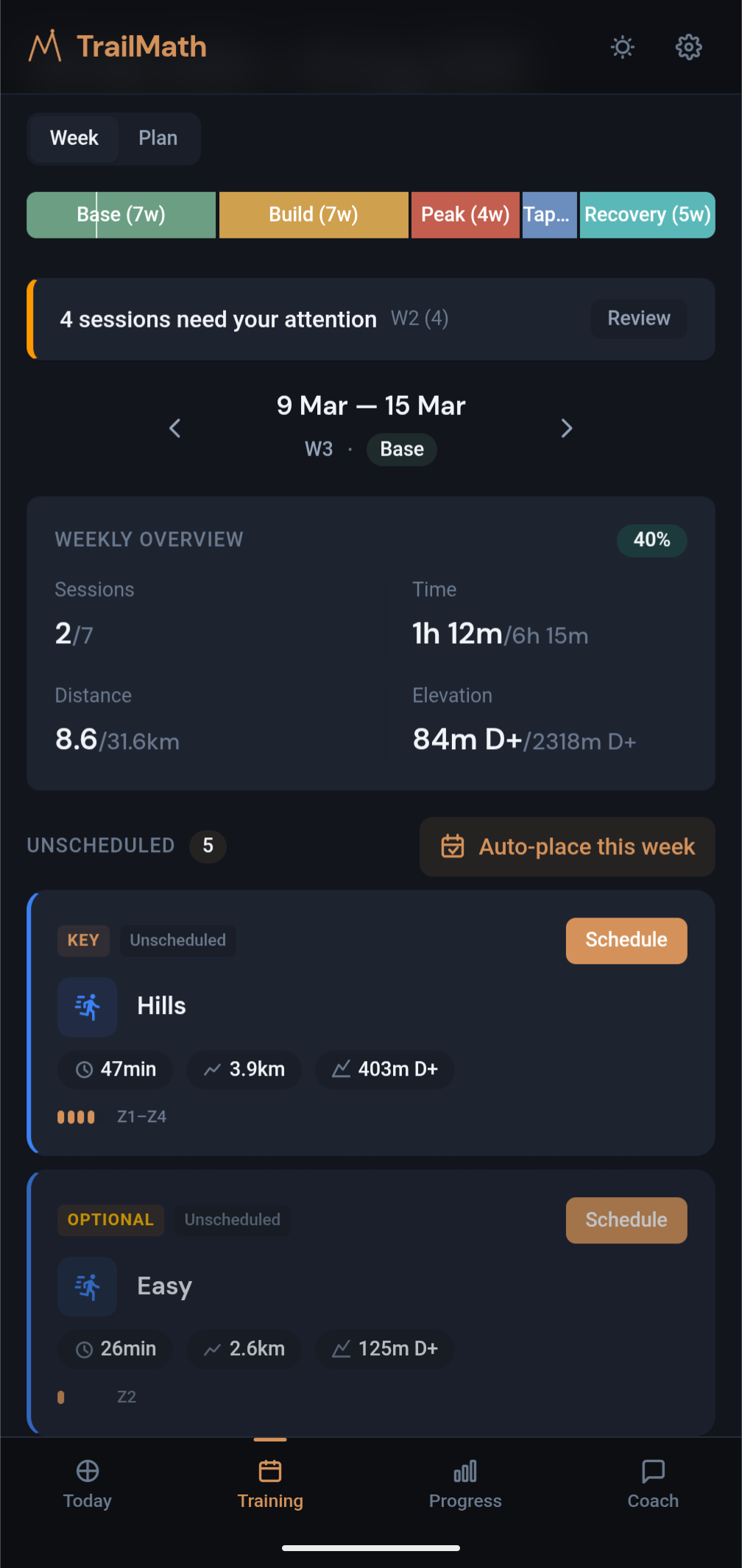
Plan your week
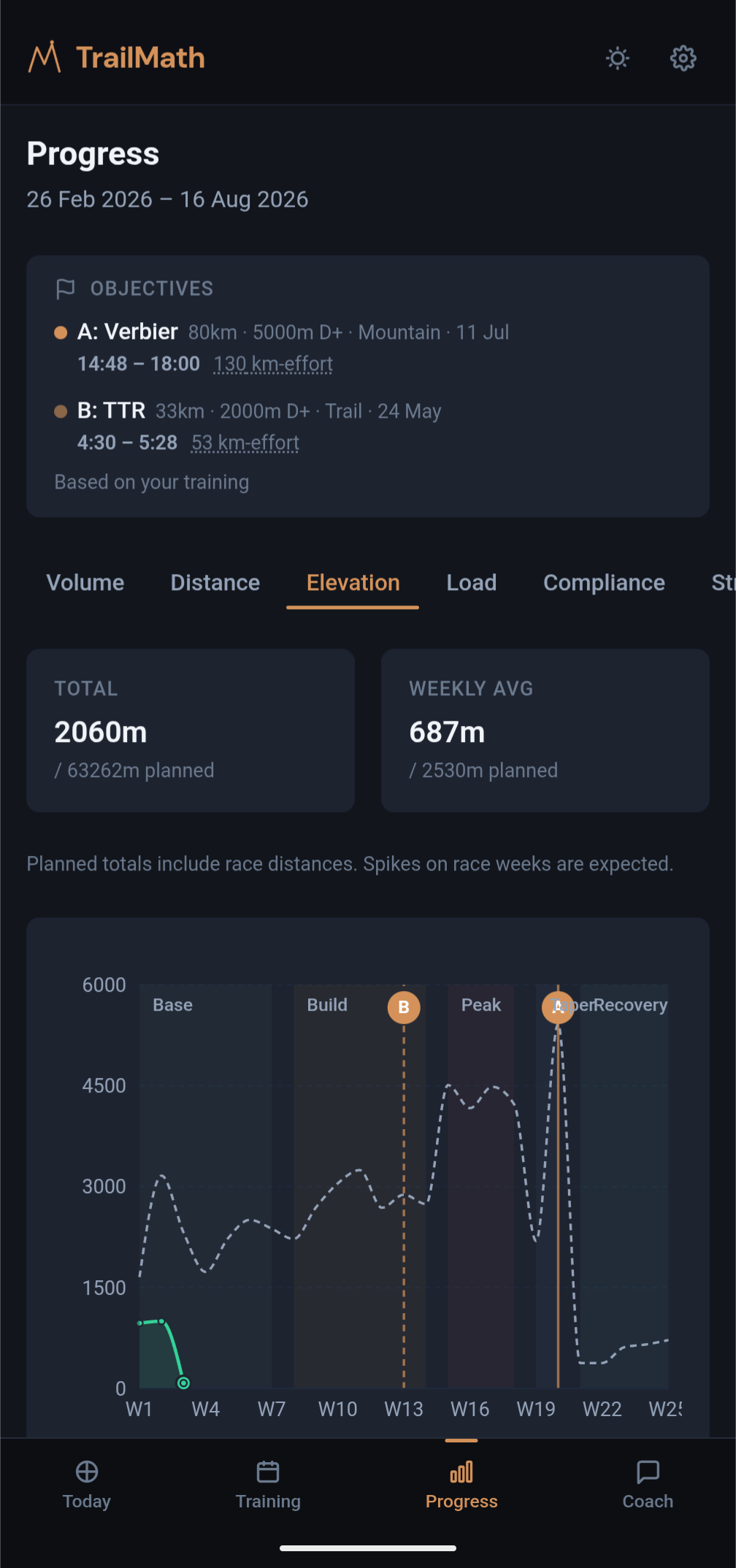
Track your progress
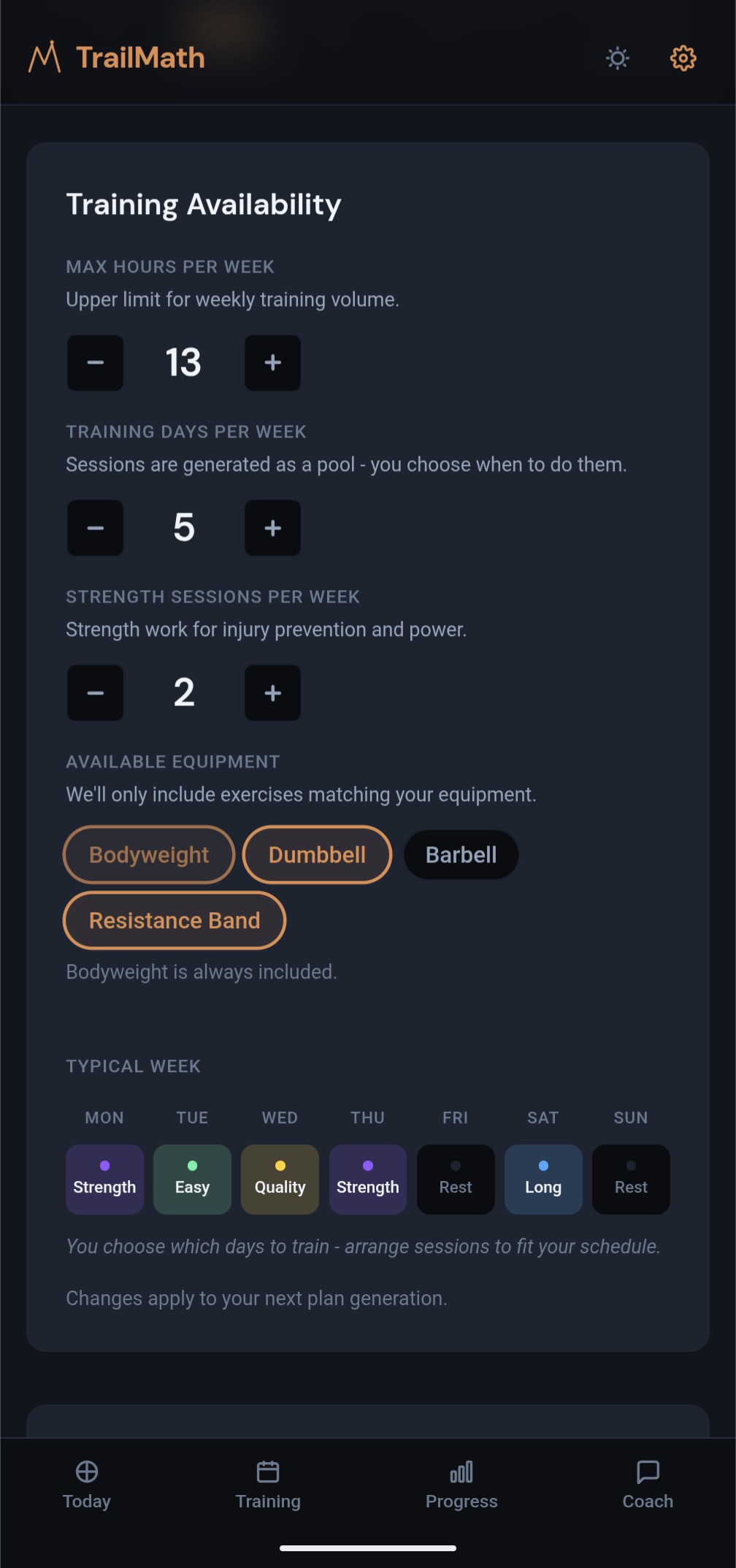
Set your preferences
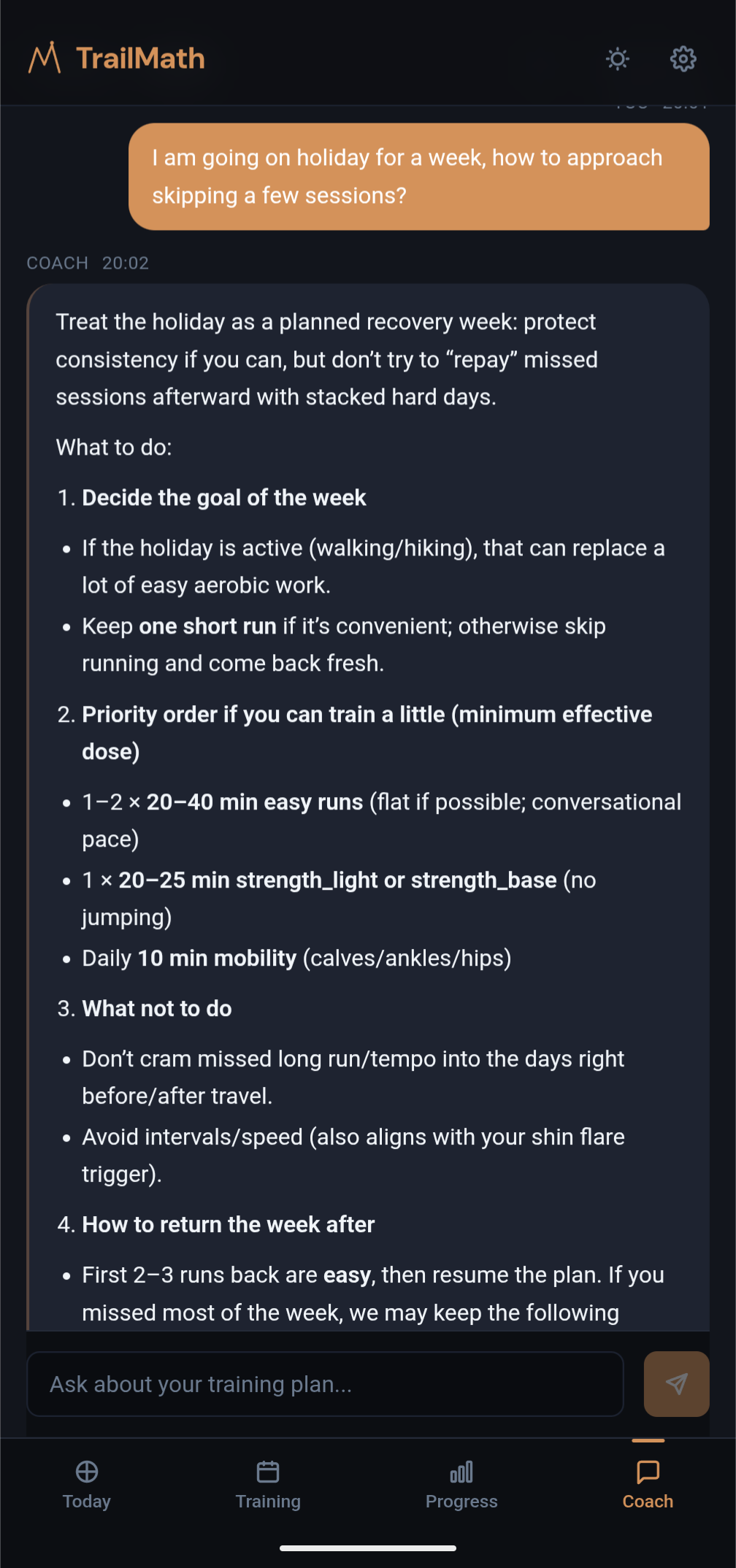
Review training adjustments
Training plans
Start from a proven structure. Each plan defines phases, session types, and progression rules for a specific goal.
Build a solid aerobic foundation for trail running. Ideal for early season or returning after a break.
Develop uphill power and climbing efficiency for mountain races with sustained ascents.
Build eccentric quad tolerance and descent durability for technical downhill terrain.
Raise your sustainable trail pace through targeted tempo and interval work.
Prepare for ultra-distance events (50-100k) with progressive long-run development and fueling practice.
Convert your fitness into race-day performance with structured peaking and taper.
Private. European. Yours.
Hosted in Europe
All data stored on Hetzner, Germany. GDPR-compliant by architecture.
Private by default
No social features, no public profiles, no third-party trackers. Your training is yours.
Export or delete anytime
Download all your data or request full account deletion. No data hostage situations.
Minimal data, bounded rules
14-day rolling window. No personal identifiers sent to the model. No training on your data. Suggestions follow rule-based constraints, not open-ended generation.
Pricing
Full access to all templates, AI coaching, and plan features. No limits.
Start freeNo credit card required. EU hosting included.
Frequently asked questions
No. Most templates are development-focused – building climbing power, speed, or endurance without a specific race date. If you do have a race, the Race Peak & Taper template structures your entire build-up around it.
Both. During plan setup you set your current weekly volume and experience level. Session intensity, progression rate, and recovery are adapted to your profile. Beginners start with 3-4 sessions per week and gentler volume ramps.
Yes. Connect Strava or Garmin from your account settings. Activities sync automatically and are matched to your planned sessions. With Garmin, you can also push upcoming workouts directly to your watch. All sync data is stored in the EU and cached activity imports are automatically deleted after 7 days.
Mark sessions as skipped and the system will suggest adjustments for the following week. It can reduce volume, swap session types, or extend your plan timeline – all within safe progression boundaries.
Yes. You can export your plan data at any time from your account settings. We believe your training data belongs to you.
No. TrailMath is a planning tool, not a substitute for medical advice or professional coaching. The suggestions are bounded by conservative training principles, but you should always listen to your body and consult a professional for injuries or health concerns.
Still have questions? Get in touch